

Why PET can not be used to make caps ?
The bottle body is PET, so why can't the cap be PET?
Bottled water, cola, tea drinks—we all think of bottled beverages as being made of PET, but that's only half true. The bottle body is indeed PET, but the cap isn't. Those in the packaging industry are used to this, but the average consumer probably never thinks about what material that bottle cap they unscrew every day is made of, and why PET can't be used for bottle caps.
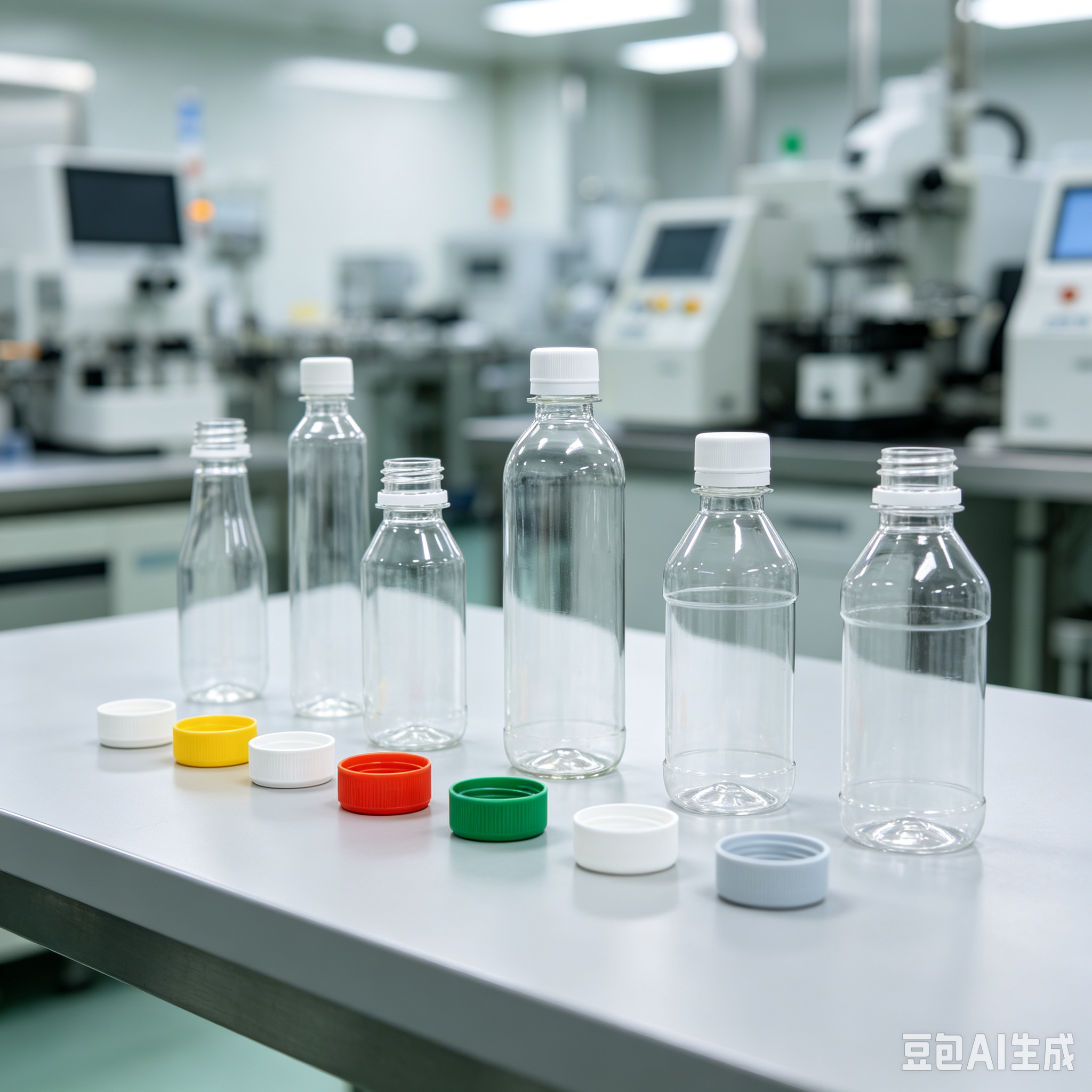
The material most deserving of being a bottle cap is precisely the one that doesn't.
Conventionally, from the perspective of ease of recycling and processing, PET is the most suitable material for bottle caps.
It's transparent, strong, and matches the bottle's color perfectly, creating a seamless look. PET is also recyclable; the global recycling system was built for it. Using PET for both the bottle cap and the cap, recycling wouldn't require sorting—wouldn't that be the perfect solution?
However, the reality is that almost all beverage bottle caps worldwide are made of PP and HDPE. Theoretically, PET has superior mechanical properties, but it just doesn't get used in practice, for three reasons.
Reason 1: Sealing Logic
The root of the problem lies in the sealing method. Bottle caps don't seal by simply "putting them on," but by elastic deformation.
At the moment of tightening, the inner plug or sealing ring of the cap is deformed by the bottle opening, taut like a rubber band, completely filling any thread gaps. This amount of deformation is fundamental to the seal.
The problem with PET is that it's too rigid. PET's flexural modulus is approximately 2.45 GPa, while PP is only 1.5 GPa, a difference of nearly 1 GPa. This 1 GPa difference means that under the same tightening torque, the deformation of a PET cap is much smaller, resulting in a less tight seal, allowing air to escape through the thread gaps.
The bottle body needs to be rigid, while the cap needs to be flexible and deformable; these requirements for the two sections of the same bottle are fundamentally contradictory.
Reason 2: Inability to Withstand Internal Pressure Creep
Hardness is only the first hurdle; time is even more crucial. While PET is very hard and can withstand instantaneous stress, carbonated bottle caps need to withstand it for months, not just a moment.
The inside of carbonated beverage bottles is pressurized. From the moment of filling, the caps need to withstand pressure for months. National standards have strict requirements for carbonated bottle caps: maintaining pressure without leakage at 690 kPa and not detaching at 1207 kPa. At this point, the cap is not just a lid, but also the lid of a pressure vessel; it must withstand creep and remain firm and undeformed under long-term pressure.
PET is inherently weak in this regard. PET has an amorphous structure and is hygroscopic, making it prone to deformation under stress. According to industry data, high moisture absorption can reduce mechanical properties by up to 60%. Carbonated bottle caps require long-term gas retention, which is precisely PET's weakness.
Reason 3: Processing and Economics
Even if the performance were to be artificially improved, the cost wouldn't be justified.
For bottle caps with equivalent performance, PET is about 20% heavier than HDPE. Since caps are sold individually, this extra 20% is all added cost. Furthermore, PET requires higher processing temperatures and has a longer molding cycle, making it less efficient than HDPE.
According to SACMI data, PET processing temperatures start at 270°C, while HDPE is below 200°C. The melting and cooling process alone is significantly slower, increasing the cycle time by 70%. A compression molding machine producing HDPE caps takes 1.35 seconds to cycle, producing 2850 caps per minute; this speed is unthinkable with PET.
In short, PET has excellent performance characteristics, and these superior properties in the bottle itself are precisely what the cap doesn't need.
PET won't work, so what should we use?
The bottle cap can't be PET, but PP and HDPE aren't chosen arbitrarily either; they're categorized into three levels based on the contents.
|
Beverage type |
Cap material |
Why |
|
Caberated drink |
PP |
Anti-creep airlock, withstands internal pressure |
|
Hot fill tea |
PP |
It can withstand sterilization at 100 degrees Celsius, but HDPE is not heat-resistant. |
|
Water, juice |
HDPE |
Low temperature resistant, self-lubricating, and price lower |
PP caps are used for carbonated beverages. PP's strengths lie in its resistance to creep and gas trapping, plus its heat resistance is sufficient to withstand the 100°C sterilization required for hot filling. HDPE is used for mineral water and juice. It's resistant to low temperatures, self-lubricating, flexible, and provides a good seal. Crucially, it's also cheaper. Room temperature water without internal pressure doesn't need the rigidity of PP.
So, when you unscrew the caps of a cola and a mineral water bottle, it's essentially two different materials operating within their respective comfort zones.
Actually, there's more to the cap than meets the eye.
The tamper-evident ring on the bottle cap is an easily overlooked engineering detail. The plastic ring that snaps with a "click" when opened is held in place by 4 to 8 thin-walled connecting bridges, each only 0.2 to 0.5 mm thick. There's a protrusion at the bottle neck; when unscrewing, the ring gets stuck and the bridge breaks.
This design is ingenious in its torque window. The national standard GB/T 17876 requires the tamper-evident ring to have an opening torque of 0.6 to 2.0 N·m. Too tight and it won't turn; too loose and it's prone to cracking during transport. Furthermore, the thickness tolerance of the connecting bridges must be controlled to ±0.05 mm, even more stringent than many precision parts.
A small plastic ring essentially tells you whether the bottle has been opened or not—it's honest about the materials and gives you peace of mind before drinking.
